
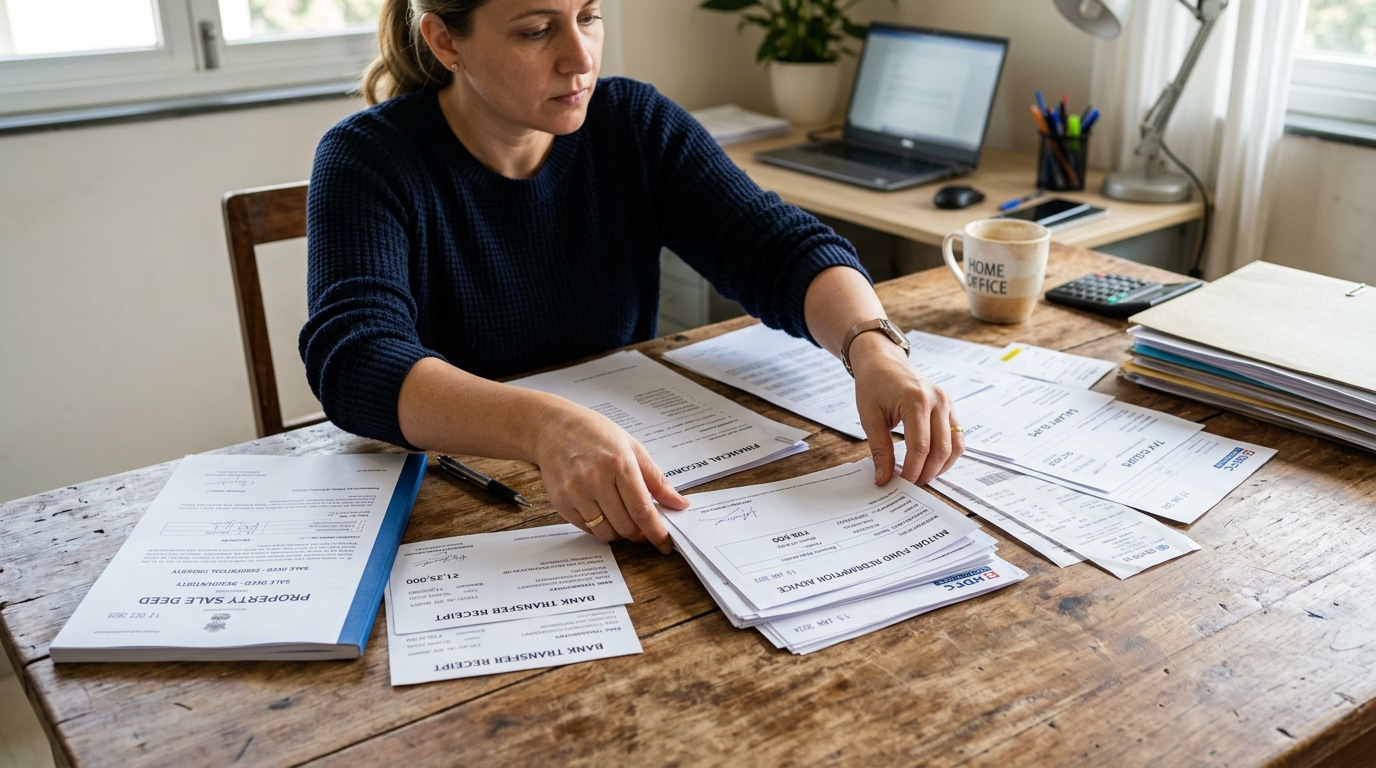
Receiving a large, sudden deposit in your bank account right before applying for a Schengen visa can raise questions during financial audits. Even if the money is legitimately yours—from an asset sale, mutual fund redemption, bonus, or family gift—submitting an unexplained lump-sum deposit shortly before your VFS Global appointment can lead to a Ground 3 refusal ("insufficient means of subsistence").
Without supporting documentation, visa officers may assume recent large deposits are temporary borrowed funds arranged only to pass the visa check. When this happens, the officer excludes the deposit and evaluates your application based on your lower average historical balance.
This guide outlines how visa officers evaluate large deposits, the threshold rules they apply, and the exact sourcing documents you need to attach for asset sales, investments, gifts, or bonuses.
Why Large Sudden Deposits Trigger Immediate Ground 3 Refusals
The Borrowed Funds Assumption
Visa officers operate under the assumption that large cash entries appearing within 30 to 60 days of application may be borrowed money. If a deposit falls within this window without explanation, it is excluded from liquid funds calculations.
Schengen Visa Code Article 14 Reliability Check
Article 14 requires proof of reliable means of subsistence. An unverified deposit fails the reliability check because officers cannot confirm whether the funds belong to you long-term or will be withdrawn immediately after visa issuance.
What Counts as a "Lump-Sum Deposit" in a Bank Statement Audit?
The 50-Percent Threshold Rule
Officers flag deposits that exceed 50% to 100% of your regular monthly income or average balance. For example, if your monthly salary is ₹80,000, a deposit of ₹4,00,000 stands out and requires documented justification.
Cash Deposits vs. Electronic Transfers
Digital transfers (NEFT, RTGS, IMPS) leave clear paper trails. Counter cash deposits leave no digital trail and are scrutinized heavily. Proof of origin (withdrawal slip, sale deed) must be attached for cash deposits.
Acceptable Sourcing Documents for Large Deposits
Property and Asset Sales
- Registered sale deed showing execution date and buyer/seller names.
- Bank transfer advice or cheque credit slip matching the sale price.
- Form 16B / TDS tax deduction receipt if applicable.
Investment Redemptions (Mutual Funds & FDs)
- Mutual fund redemption statement matching bank deposit date and amount.
- Fixed Deposit (FD) maturity advice or premature closure summary.
Employment Bonuses
- Employer bonus letter on official letterhead specifying the performance period.
- Salary slip showing the bonus line item matching the credited amount.
Family Gifts: The Gift Deed Requirement
- Registered gift deed executed on stamp paper signed by donor and recipient.
- Donor's stamped bank statement showing the outgoing debit transfer.
- Donor's ID copy and proof of relationship.
Provident Fund (PF) Withdrawals
- EPFO withdrawal summary statement or Form 19/10C settlement receipt.
How to Write a Financial Sourcing Explanation Letter
Include a Source of Funds Declaration directly after your bank statements in your application package:
- State the exact deposit amount, date, and receiving account number.
- Specify the origin (asset sale, FD maturity, bonus, family gift, PF).
- List all attached verification documents in numerical order.
For comprehensive advice on overall balance requirements, see our Schengen visa bank statement requirements guide. Ensure income details match tax filings outlined in our ITR requirements for Schengen visa applications article.
Expert Consular Auditor Insights
Bilateral Paper Trail: Provide records for both sides of a transaction. Showing an incoming credit without the donor's outgoing debit creates an incomplete record.
The Seasoning Principle: Whenever possible, allow funds to stay in your savings account for at least one to two statement cycles (30 to 60 days) before applying.
Frequently Asked Questions
Q1: Will a sudden deposit get my Schengen visa rejected?
Yes, if left unexplained. Unverified sudden deposits are assumed to be borrowed funds, causing Ground 3 refusals.
Q2: How long before applying should money be in my bank account?
Ideally 3 to 6 months. Any large deposit made within 30 days requires mandatory sourcing documents.
Q3: How do I explain a cash deposit from a property sale?
Attach the registered sale deed, bank credit advice, and Form 16B/TDS receipts.
Q4: Can parents gift money into my account before I apply?
Yes, with a signed gift deed on stamp paper, the parent's debit bank statement, and proof of relationship.
Q5: Is a mutual fund redemption advice acceptable as sourcing proof?
Yes. Attach the mutual fund redemption statement matching the credit date and amount in your bank account.
Q6: What if I transferred money from my secondary bank account?
Submit stamped bank statements for both accounts showing the debit in one and credit in the other.
Q7: What is considered a "large deposit" by consular officers?
Any deposit exceeding 50% to 100% of your average monthly balance or regular salary.
Q8: Can I explain a deposit in my cover letter?
Yes. Dedicated a paragraph stating the deposit date, exact amount, source, and attached proof.
Q9: Are cash deposits made at bank counters accepted?
Counter cash deposits lack digital trails and require strong documentary evidence of origin.
Q10: Should I lock funds in a Fixed Deposit or keep them in savings?
Keep trip funds in an active savings account. FDs are secondary non-liquid assets.
Author
ExpressVisa Schengen Editorial