
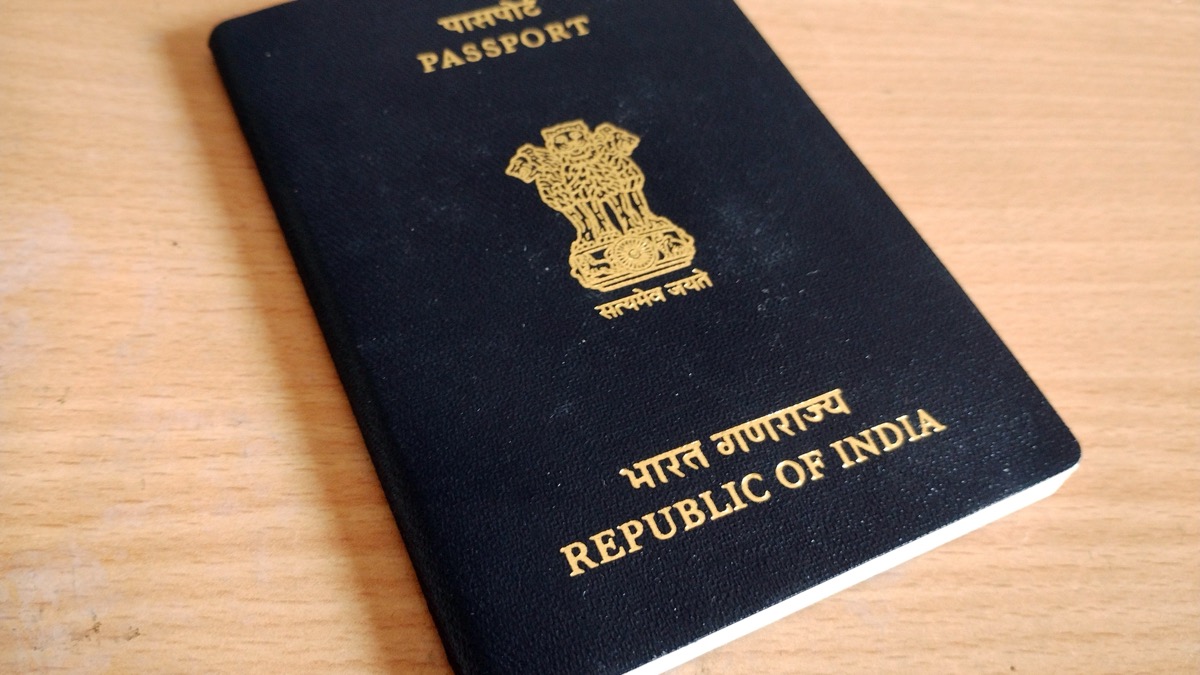
One of the most widespread misconceptions among Indian travelers is that you must travel back to your hometown or renew your passport simply because your current residence does not match the address printed on your passport booklet. Thousands of applicants delay their applications, spend weeks waiting for passport reissue appointments, or attempt to apply from the wrong consular jurisdiction, all because of a misunderstanding that has no basis in Schengen regulations.
Under Schengen Visa Code regulations, consulates evaluate where you actively live and work today, not where your passport was printed years ago. Your Passport Biodata Page records your Place of Issue and the address you held at the time of police verification. It does not bind you to that jurisdiction for the rest of your life. This guide provides exact instructions on declaring your present address accurately, preventing consular confusion, and including the mandatory address clarification clause in your cover letter. Every instruction reflects the 2026 application procedures and digital verification standards applied across all Schengen representations in India.
The Legal Distinction: Place of Passport Issuance vs. Current Habitual Residence
Your Passport Reflects Where You Lived, Not Where You Must Apply
The Indian passport is a sovereign identity and citizenship document. The address printed on your Passport Biodata Page reflects where you resided at the time of police verification during passport issuance or reissue. It is a historical snapshot, not a permanent geographic anchor. If you received your passport in Patna in 2019 and moved to Bengaluru in 2021 for employment, your passport still displays your Patna address. This is entirely normal and expected by consular officers.
Schengen consulates do not require your passport address to match your application city. The consular officer reviewing your file understands that India's mobile workforce generates millions of professionals whose passports reflect ancestral hometowns while their economic lives are anchored in metropolitan hubs. The address difference itself is never a problem. What causes a refusal is silence: submitting contradictory addresses across your application form, your Employer No Objection Certificate (NOC), and your bank statements without a clear explanatory cover letter.
Consular Territorial Competence is Governed by Present Residence
Consular Jurisdiction Competence under Schengen Visa Code Article 6 is governed solely by where you have physically resided for the preceding six months. This is your Permanent Address vs. Present / Habitual Domicile distinction. Your permanent address is the location printed on your passport. Your present habitual domicile is the city where you sleep, work, pay rent, and conduct daily transactions today.
The consulate that holds legal authority over your file is determined by your present habitual domicile, not by the Place of Issue on your passport. If you live and work in Gurgaon, your file belongs to the New Delhi jurisdiction, regardless of whether your passport was issued in Ranchi, Bhopal, or Thiruvananthapuram. For a complete breakdown of how India is divided into consular zones, refer to our master guide on Schengen visa domicile rules and consular competence across Indian zones.
Filling the Schengen Application Form: Permanent vs. Current Address
Field 17 and Field 19: What to Enter
The Harmonized Schengen Visa Application Form contains specific fields for address declaration. Field 17 requests the applicant's postal address and email address. Field 19 requests your current occupation and employer details. Both fields must reflect your current physical reality, not your historical passport address.
In Field 17, you must enter your current physical residence where you live today. Enter the address of your rented apartment in Bengaluru, your company-provided accommodation in Pune, or your family home in Delhi NCR where you currently reside. Do not enter the old passport address. Do not enter your ancestral village address. Enter the address where you physically sleep every night and where your bank statements show daily transaction activity.
The Consistency Check: Aligning All Documents
The consular officer performs a consistency check across your entire file. Your phone number prefix, your employer's office address on the NOC, your bank statement transaction locations, and your Field 17 entry must all harmonize. If Field 17 states a Mumbai address but your bank statements show daily UPI transactions in Hyderabad, the officer identifies a contradiction immediately.
The most common mistake is entering your hometown address in Field 17 while submitting your file at a Delhi or Mumbai center without explanation. This creates immediate counter confusion. The intake officer sees an address that does not correspond to their jurisdiction and may flag your file before it reaches the consular adjudication stage. Always enter your current, active residence in Field 17 and explain the passport address difference in your cover letter.
The Mandatory Cover Letter Address Clarification Clause
Template: Address Clarification Paragraph
Your Consular Cover Letter Address Clarification Clause must proactively explain the difference between your passport address and your current residence in the introductory profile paragraph. Do not wait for the officer to discover the discrepancy. Address it directly, factually, and with documentary references.
Use the following blueprint text, adapted to your specific circumstances:
"I hold Indian Passport No. [XXXXXXX], issued at Regional Passport Office, [City A], reflecting my permanent ancestral address at [Full Address A]. For the past [X] years and [Y] months, I have been residing and gainfully employed in [City B] at [Full Address B], which falls under the territorial jurisdiction of this Honorable Consulate. I have enclosed my registered lease agreement dated [Date], my employer deputation letter confirming my local office branch, and my salary bank statements showing continuous local transaction activity, all confirming my Local Domicile Substantiation in [City B]."
This paragraph accomplishes three objectives. First, it acknowledges the passport address transparently. Second, it states your current residence and its duration. Third, it directs the officer to the specific documents that prove your current domicile. Without this clause, the officer must guess why an applicant with a Jaipur passport is applying in Mumbai, and that uncertainty feeds directly into a Ground 2 refusal.
For comprehensive guidance on structuring your entire cover letter around this clause, refer to our guide on how to draft an address clarification clause in your cover letter.
Triangulating Documents to Eliminate Consular Doubt
The Four-Pillar Verification Framework
Visa officers verify that the applicant is not jurisdiction shopping by examining four independent document categories. Each pillar must converge on the same city and the same residential address. If even one pillar points to a different location, the officer's confidence in your file erodes.
Pillar 1: Employer No Objection Certificate (NOC). Your NOC must confirm your employment at the local city branch. It must state the physical office address where you report for work, your designation, your date of joining at that specific branch, and your approved leave dates. If your company is headquartered in Mumbai but you work in Delhi NCR, the NOC must explicitly state your Delhi NCR office location.
Pillar 2: Salary Account Statements. Your bank statements must show continuous monthly direct salary deposits and local daily UPI or card spends in your current city. The officer examines the geographic pattern of your transactions. If your salary is credited to a branch in your current city and your daily grocery, transport, and dining debits all occur locally, your residency claim is verified.
Pillar 3: Form 16 and Income Tax Return Filings. Your Form 16 must reflect your current employer's corporate tax jurisdiction. Your ITR filings should show the same employer and the same city of employment. This creates a government-verified link between your declared income and your claimed residence.
Pillar 4: Registered Lease Deed. Your registered rent agreement confirms your local residential tenancy. It must carry the Sub-Registrar registration number and show at least six months of historical occupancy. For detailed guidance on preparing this document, consult our article on validating rental agreements as proof of current residence.
Special Scenarios: Students, Fresh Graduates, and Newly Relocated Professionals
Relocated Less Than Six Months Ago
If you relocated to a new city less than six months before your intended application date, you face a specific challenge. The six-month domicile threshold has not been met in your new city. You have two options. First, delay your application until you cross the six-month mark. Second, submit your official corporate transfer order or employment appointment letter explaining the recent relocation, combined with your previous city's documents showing continuous residence there until the transfer date.
The corporate transfer order must clearly state your relocation date, your previous office location, and your new office location. This demonstrates that your move was institutionally authorized, not an ad hoc arrangement created for visa purposes.
College Students Studying in Another State
College students studying in a city different from their passport address must submit a Bonafide Student Certificate and College ID card confirming campus residence. The bonafide certificate must state your enrollment date, your course name, your expected graduation date, and your hostel or residential address. Combine this with a letter from your parent or guardian sponsoring the trip, along with their financial documents.
Living with Friends Without a Formal Lease
If you reside with friends in an informal arrangement without a registered lease agreement, you face elevated refusal risk. The consular officer cannot verify your residence through institutional documentation. Before applying, formalize your living arrangement. Execute a registered rent agreement or obtain a written accommodation declaration from your friend, supported by their property ownership documents or their own registered lease. Without legal documentation, your Local Domicile Substantiation fails, and your file is vulnerable to rejection.
Step-by-Step Process: Resolving Your Address Mismatch Before Submission
1. Keep your valid passport as is. Do not apply for an address change passport reissue solely for a Schengen visa. The address difference is legally irrelevant to consular jurisdiction. 2. In Field 17 of the Harmonized Schengen Visa Application Form, enter your current, active physical residence. Ensure your email and phone number are current. 3. Collect your Local Domicile Substantiation documents: Registered Rent Agreement, local utility bill, and Employer No Objection Certificate specifying your current office branch. 4. Insert the standardized Address Clarification Paragraph into Section 1 of your Consular Cover Letter. Reference your passport Place of Issue, your current address, and your enclosed proof documents. 5. Book your appointment at the authorized application center corresponding to your current residential jurisdiction. For the complete day-of procedure, review our appointment day checklist for regional biometric hubs. 6. Ensure all supporting documents (bank statements, insurance policy, employment letters) display your current city address consistently.
For a comprehensive overview of all required documents beyond address proof, review Schengen tourism visa documentation rules before finalizing your file.
Expert Consular Auditor Insights
The Silence Problem. Visa officers process thousands of files from IT professionals whose passports say Kerala, Punjab, or Bihar, but who live in Bangalore or Gurgaon. The address difference itself is never a problem. What causes a refusal is silence. Submitting contradictory addresses across your form, NOC, and bank statement without a clear explanatory cover letter forces the officer to draw negative inferences. Always explain proactively.
The Digital Forgery Warning. Never alter an address on a bank statement PDF to match your passport or your application form. Consulates scan digital barcodes embedded in bank-generated PDFs and run verification checks directly with issuing banks. Modifying a PDF constitutes document forgery under Schengen Visa Code Article 32(1)(a)(i) and results in an irreversible Schengen-wide entry ban. No visa is worth a permanent ban from 29 countries.
The Remote Work Jurisdiction Rule. If your company is headquartered in Mumbai but you work fully remotely from Dehradun, your file belongs in the North India jurisdiction, supported by an explicit remote-work addendum from HR. The determining factor is your physical location, not your employer's registered office. Your NOC must state: "The employee is authorized to work remotely from [City] and reports to the [City] virtual office." Without this clarification, the officer sees a Mumbai employer and questions why you are applying through a northern jurisdiction.
The Pre-Submission Audit. If you are uncertain whether your address documentation is sufficient, do not guess. Submit your file for professional review before your appointment. You can request an expert document pre-check before submission to identify gaps, contradictions, or missing explanatory clauses before the consular officer sees them.
Frequently Asked Questions
Q1: Can I apply for a Schengen visa if my current address is different from my passport?
Yes. Schengen consulates assess your current habitual residence, not your passport address. You must provide local domicile proof and include an address clarification clause in your cover letter.
Q2: Do I need to reissue my Indian passport to update my address before applying?
No. Passport reissue is not required. Consular jurisdiction is determined by where you have lived for six months, not by the address printed on your passport biodata page.
Q3: Which address should I fill in Field 17 of the Schengen visa application form?
Enter your current physical residence where you live and work today. Do not enter your old passport address. Field 17 must reflect your active, verifiable present address.
Q4: How do I explain my address mismatch in the Schengen visa cover letter?
Include a dedicated paragraph stating your passport Place of Issue, your current residential address, the duration of your residence, and the enclosed documents proving your local domicile.
Q5: What proof of residence is required if my passport was issued in another state?
Submit a registered rent agreement, employer NOC with local office address, localized bank statements, and utility bills. These collectively establish your current habitual domicile.
Q6: Can I apply for a Schengen visa in Delhi if my passport was issued in Kolkata?
Yes, provided you have resided and worked in the Delhi jurisdiction for at least six continuous months. Your passport Place of Issue does not restrict your application location.
Q7: What happens if my employer is in Mumbai but I work remotely from Bangalore?
Your file belongs in the Bangalore jurisdiction. Obtain an HR remote-work authorization letter stating your physical work location is Bangalore. Attach this alongside your standard NOC.
Q8: Does an address difference between passport and bank statement cause visa refusal?
Not if explained properly. The refusal occurs when addresses are contradictory and unexplained. Include an address clarification clause and ensure your bank statement shows local activity.
Q9: Can college students apply from the city where their university is located?
Yes. Students apply from their university city. Submit a Bonafide Student Certificate, college ID, and hostel or accommodation proof confirming campus residence for the required period.
Q10: How does Express Schengen Visa help applicants with address mismatches?
Express Schengen Visa is an independent consultancy charging a flat ₹3,000 professional fee. We are not affiliated with any government or VFS Global. We audit your address documents, draft clarification clauses, and verify jurisdictional alignment before submission.
---
Regulatory Compliance and Consular Advisory Notice
- 1. Independent Document Advisory Status: Express Schengen Visa is an independent document audit and visa file curation consultancy. We are not affiliated with, endorsed by, or associated with VFS Global, BLS International, TLScontact, or any European embassy, consulate, or sovereign diplomatic mission.
- 2. Strict Short-Stay Category C Scoping: Our advisory and auditing services are strictly limited to short-stay Schengen Category C visas (tourism, business travel, family visits, and cultural exchanges not exceeding 90 days). We do not provide long-stay national visa assistance, employment sponsorship, job-seeker visas, or immigration clearance under the Indian Emigration Act, 1983.
- 3. Sovereign Consular Discretion: The issuance, processing timeline, and ultimate decision on any visa application remain the sole and sovereign discretion of the competent Schengen Member State consulate. No third party or consultancy possesses the authority to guarantee visa approval, influence consular adjudication, or secure expedited appointment slots.
- 4. Flat Professional Fee Transparency: Express Schengen Visa operates under a transparent flat professional fee structure of ₹3,000 per applicant for end-to-end document auditing, cover letter curation, and file structuring. All statutory Schengen consular visa fees (€90 adult / €45 child) and Authorized Application Centre logistics service fees are payable directly to the official intake authorities.
Author
ExpressVisa Schengen Editorial