
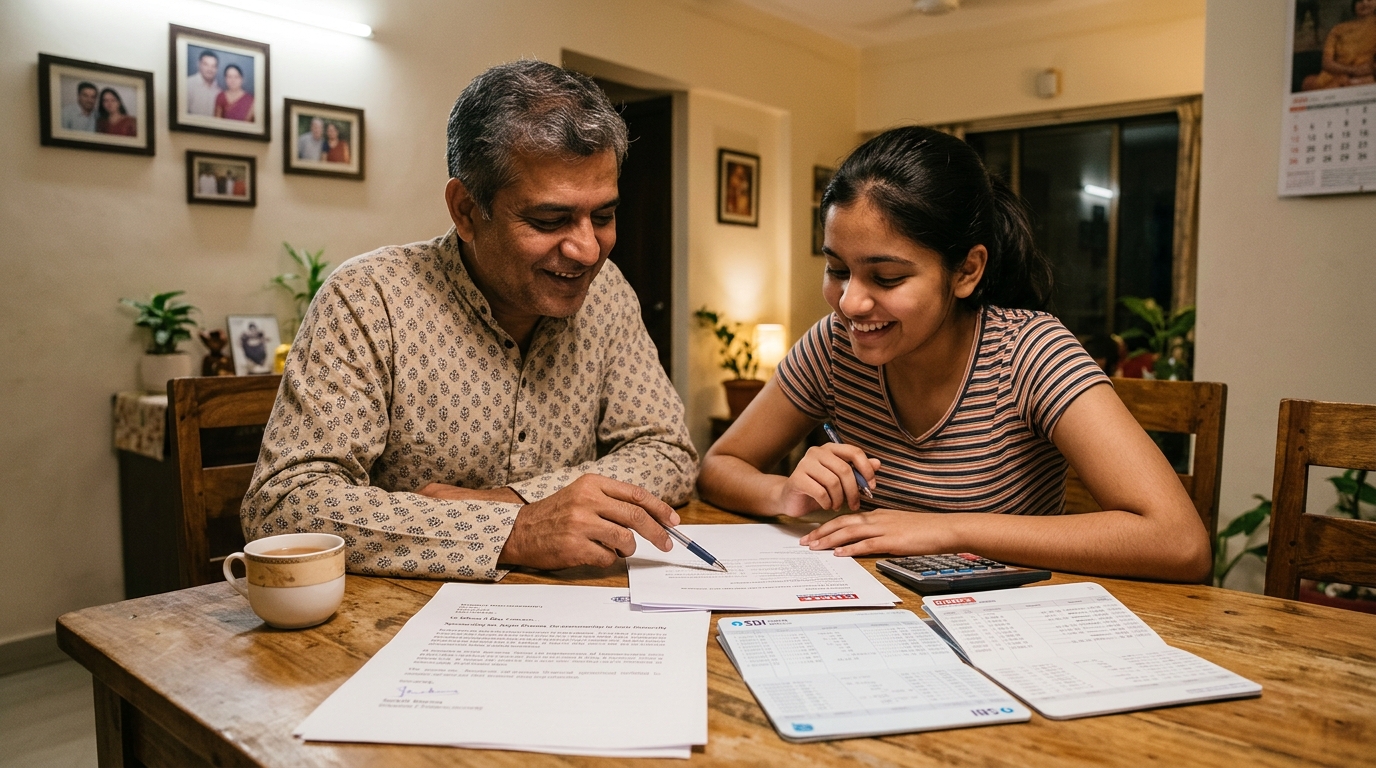
Indian students, homemakers, or applicants without sufficient personal savings must show financial sponsorship when applying for a Schengen visa. Your sponsor—whether a parent, spouse, or host living in Europe—must provide the embassy with clear, structured proof that they have the funds, authorize their use for your trip, and will cover all expenses, including emergency medical needs.
This commitment is detailed in a sponsorship letter. A vague letter without matching bank statements or relationship documents will often trigger a Ground 3 refusal ("insufficient means of subsistence for the duration of the stay"). This is one of the most common reasons for rejection among sponsored Indian applicants, yet it is easily preventable with correct documentation.
This guide outlines the sponsorship options accepted by French, German, and Italian consulates, the checklist your sponsor must follow, and the mistakes to avoid.
Why the Sponsorship Letter Determines Approval or Ground 3 Refusal
What Schengen Visa Code Article 14 Requires from Financial Sponsors
Schengen Visa Code Article 14 requires applicants to show sufficient means of subsistence for their stay. When the applicant is not self-funding, the burden of proof shifts to the sponsor. The embassy must be satisfied that the sponsor has the capacity and the legal commitment to cover every expense the applicant will incur.
The sponsorship letter is the formal declaration of that commitment. It is not an informal note; it is a structured declaration that the visa officer will verify against the sponsor's bank statements, tax records, and ID proofs. If any details are missing or inconsistent, the officer will issue a Ground 3 refusal.
The Visa Officer's Assessment: Liquidity, Relationship, and Commitment
When reviewing a sponsored file, visa officers assess three main factors: liquidity (does the sponsor have enough funds), relationship (is the connection immediate and credible), and commitment (does the letter cover all categories of expenses including emergencies).
Failure on any of these points results in a rejection. A sponsor with high balances but no proof of relationship will be rejected. A sponsor with a clear family connection but insufficient funds will be rejected. All three requirements must be met together.
Types of Schengen Visa Sponsorship
Internal Family Sponsorship (Sponsor Residing in India)
This is the most common setup. A parent, spouse, or adult child living in India funds the applicant's trip. The sponsor drafts a letter on plain paper, attaches their financial files, and submits the package alongside the applicant's documents at VFS.
For domestic sponsorships, submitting a sponsorship letter that is notarized on stamp paper (usually 50 or 100 rupees) is highly recommended. This gives the document legal weight and increases the visa officer's confidence in the application.
European Host Sponsorship (EU Resident Inviting an Indian Relative)
If your sponsor lives in Europe, they must register an official sponsorship declaration at their local municipal office. In Germany, this is called a Verpflichtungserklärung (declaration of commitment). In France, it is the attestation d'accueil, obtained from the local town hall (mairie).
These government-registered forms carry more weight than private letters because consulates can verify them directly with the issuing municipality. Without these official forms, a private letter is usually not accepted.
Corporate Sponsorship for Business Travelers
A company can sponsor an employee's travel expenses, but only for business visa applications. Corporate sponsorship is not accepted for tourist visas. Leisure travel must be self-funded or sponsored by an immediate family member.
The Mandatory Sponsorship Letter Checklist
The sponsorship letter must contain the following elements. Omitting any of these may raise doubts about the application:
- Full name, date of birth, and contact details of the sponsor.
- Passport number or government-issued ID number of the sponsor.
- Full name and passport number of the applicant.
- Proof of relationship (e.g., birth certificate, marriage certificate).
- Exact travel dates matching the flight and itinerary grid.
- A clear declaration of expense coverage (flights, hotels, daily living, and emergency medical repatriation).
- Sponsor's physical signature in blue ink.
Sponsorship Letter Template: Format for Indian Applicants
Adapting a formal format is critical. The template below follows standard embassy expectations:
- Addressed formally to the Visa Officer or Consul General of the target embassy.
- Sponsor declaration details including name, passport, relationship, and applicant details.
- Specific list of covered expenses (international airfare, hotels, daily living, travel insurance, and medical repatriation).
- List of enclosed financial proofs (6 months bank statements, last 2 years ITR, salary slips, PAN copy).
To see how to link this to your cover letter, refer to our Schengen cover letter formatting guide.
Accompanying Documents Every Financial Sponsor Must Submit
Every claim in the sponsor letter must be verified with supporting documents:
- Stamped bank statements covering the last 3 to 6 months. Unstamped net-banking prints are not accepted.
- Income Tax Returns (ITR) for the last 2 assessment years.
- Salary slips (last 3 months) or business registration documents.
- Self-attested photocopies of the sponsor's ID (Passport, PAN, or Aadhaar).
- Proof of relationship (marriage certificate, birth certificate).
Expert Consular Auditor Insights: What Triggers Ground 3 Refusals
The Relationship Credibility Test
Consulates accept sponsorship primarily from immediate family (parents, spouse, adult children). Sponsoring from friends, cousins, or distant relatives in India is viewed with suspicion and often triggers rejections unless backed by an official municipal host declaration from Europe.
The Double Liquidity Threshold
The sponsor's bank balance must be high enough to cover the applicant's travel expenses while maintaining their own living costs in India. If the balance is borderline, the visa will be refused under Ground 3.
Large, unexplained deposits made right before the VFS appointment are treated as "borrowed funds" to inflate the balance, which leads to immediate rejection. The account should show consistent financial activity.
The Notarization Rule for Domestic Sponsorships
For sponsors and applicants residing in India, drafting the letter and getting it notarized on stamp paper significantly increases approval rates. It shows the sponsor understands the legal commitment of their guarantee.
Frequently Asked Questions
Q1: Can a friend residing in India sponsor my Schengen visa?
No. Consulates do not accept financial sponsorship from friends. It must come from immediate family members with verifiable proof of relationship.
Q2: What is an official EU sponsorship declaration?
It is a government-registered document issued to your host by local municipal offices in Europe (e.g. Verpflichtungserklärung in Germany).
Q3: Can my uncle or cousin sponsor my Schengen trip?
Generally no. Distant relatives are not accepted unless they live in the EU and register an official municipal sponsorship certificate.
Q4: How do I prove my relationship to the financial sponsor?
Attach official government certificates such as a marriage certificate or birth certificate showing names.
Q5: Does a sponsor need to submit Income Tax Return documents?
Yes. Your sponsor must submit their ITR acknowledgments for the last two assessment years to verify their income source.
Q6: What is a Ground 3 refusal in sponsored visa cases?
A Ground 3 refusal means the consulate determined you have insufficient means of subsistence, often caused by unstamped bank statements, low balances, or unexplained large deposits.
Q7: Can a company sponsor a tourist Schengen visa?
No. Corporate sponsorship is only accepted for business visas. Tourist travel must be self-funded or sponsored by immediate family.
Q8: Does the sponsorship letter need to be notarized?
While not strictly mandatory, getting the letter notarized on stamp paper significantly increases approval rates at Indian VFS centers.
Q9: Can a retired parent sponsor my Schengen visa?
Yes, provided they submit pension statements, proof of asset/rental income, and stamped bank statements showing sufficient liquid assets.
Q10: Is there a specific format for the sponsor's ID copy?
Submit a clear, self-attested photocopy of the sponsor's passport (first and last pages) or their PAN and Aadhaar cards.
Author
ExpressVisa Schengen Editorial