
Article 15(2) of the Schengen Visa Code states explicitly that travel insurance must cover any expenses which might arise in connection with repatriation for medical reasons, urgent medical attention, or death. If an insurance policy caps repatriation at a negligible sub-limit or omits mortal remains coverage entirely, the visa file is legally inadmissible. This guide explains the statutory necessity of repatriation, the complex logistics involved in international medical transport, and how to verify your policy schedule before lodging your application. Whether you are reviewing the approved Schengen travel insurance embassy criteria and policy selection or preparing documents for a Schengen family and friend visit visa, understanding these clauses is mandatory for file approval.
Article 15(2): Why European Consulates Demand Repatriation Guarantees
The Financial Reality of Aeromedical Evacuation
The primary reason European consulates enforce strict medical repatriation schengen visa insurance requirements is the staggering cost of international medical transport. An emergency aeromedical evacuation and air ambulance flight from a major European hospital back to India regularly exceeds 50,000 to 80,000 euros. This figure includes the specialized medical aircraft, the onboard intensive care equipment, and the team of flight paramedics and critical care physicians required to keep a severely injured or ill patient stable during an eight-hour flight. Without a robust insurance policy, an Indian traveler facing a catastrophic medical event in Europe would be unable to fund their own evacuation, leaving them stranded in a foreign healthcare system.
International Legal Responsibility and Host State Protection
Beyond the financial burden on the individual, there is a profound international legal responsibility at play. European Union Member States and their municipal authorities cannot be expected to bear the cost of repatriation or mortal remains transit for foreign nationals. The Schengen Visa Code was designed specifically to prevent third-country nationals from becoming a financial or diplomatic liability to the host state. When a consular officer reviews your file, they are assessing whether your insurance provider will assume full legal and financial responsibility for your extraction from their territory in a worst-case scenario. If the policy lacks this guarantee, the officer will reject the file to protect the host nation from potential unpaid medical and logistical debts.
The Two Distinct Branches of Repatriation Coverage
Emergency Aeromedical Evacuation and Air Ambulance
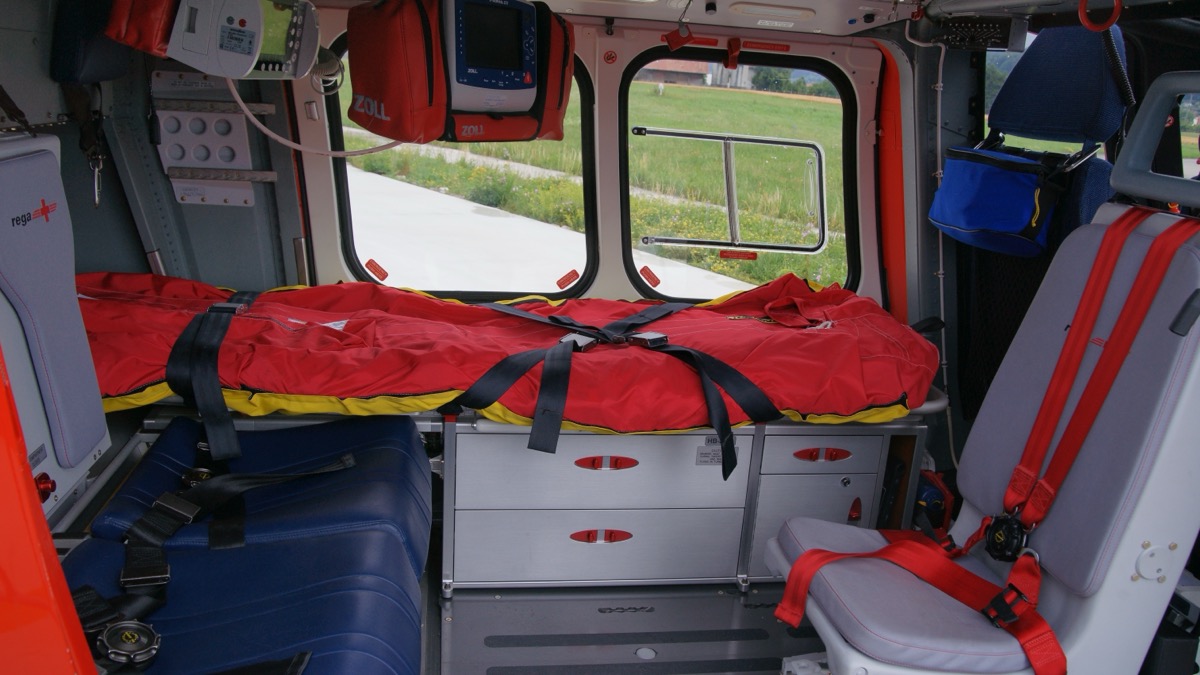
The first branch of coverage is medical repatriation or emergency medical evacuation travel insurance. This applies when a traveler suffers a severe illness or traumatic injury that cannot be adequately treated at the local European facility. The insurance company coordinates the transfer of the patient to a specialized medical center within Europe or arranges a commercial stretcher flight or dedicated air ambulance back to India. This process requires intense international assistance coordination and a 24/7 emergency response team to manage flight clearances, hospital-to-hospital handovers, and ground ambulance logistics at both the departure and arrival airports. To understand the financial thresholds for these medical events, applicants must also review the statutory €30,000 emergency medical limits and hospital coverage rules.
Repatriation of Mortal Remains and Transit Formalities
The second, more somber branch of coverage is the repatriation of mortal remains schengen visa requirement. In the tragic event of a traveler's death, the logistical and legal complexities multiply exponentially. The insurance policy must cover statutory embalming procedures, local mortuary fees, and the procurement of specialized zinc-lined hermetic air cargo caskets required for international transport. Furthermore, the insurer must handle all mortal remains transit formalities and consular clearance, which involves obtaining death certificates from local authorities, securing no-objection certificates from the Indian Embassy, and coordinating with airline cargo divisions. A compliant policy ensures that the bereaved family in India is not forced to navigate foreign bureaucracies or pay exorbitant international cargo fees during a time of grief.
Auditing the Policy Schedule: Wordings That Pass Consular Audits
Acceptable Policy Wording for VFS Checklist Compliance
During the VFS checklist compliance audit, the intake officer and the subsequent consular adjudicator will scan the Certificate of Insurance for very specific legal phrasing. Acceptable policy wording must explicitly state "Repatriation of mortal remains covered up to the policy sum insured" or "Emergency medical evacuation covered within the overall medical limit of 30,000 euros." The wording must be unambiguous. The officer needs to see that the repatriation benefit is either a distinct line item meeting the minimum threshold or fully integrated into the primary medical limit without arbitrary reductions. When organizing your financial guarantees, ensure your Schengen visa sponsorship letter format also references this comprehensive insurance coverage if a third party is funding the trip.
Unacceptable Sub-Limits and Geographic Restrictions
Unacceptable policy wording includes any clause that caps mortal remains repatriation at trivial figures, such as a maximum of 1,000 or 2,000 euros. The actual cost of transporting human remains internationally far exceeds these nominal caps, rendering the coverage practically useless. Similarly, policies that restrict medical evacuation solely to domestic transport within Europe are inadmissible for Indian applicants. The policy must explicitly guarantee repatriation to the traveler's country of origin. Applicants must be vigilant to avoid missing repatriation clauses that trigger immediate counter rejections by carefully reading the exclusions and sub-limits section of the policy document before purchase.
How Emergency Medical Evacuation Works in Practice
International Assistance Coordination and 24/7 Emergency Response
When a medical crisis occurs, the traveler or their companion must immediately contact the travel insurance emergency assistance europe helpline printed on the policy certificate. The 24/7 international assistance coordination center takes over from that moment. They open a case file, contact the treating hospital in Europe, and deploy their own network of medical professionals to assess the situation. This global assistance network negotiates directly with the European hospital, guarantees payment for the initial stabilization, and begins the complex logistical planning for either local specialized treatment or international evacuation.
Attending Medical Practitioner Certification
Evacuation is never initiated simply because the patient or their family requests it. The medical necessity standard dictates that an emergency aeromedical evacuation and air ambulance transfer must be formally ordered and certified by the attending medical practitioner in Europe, in direct consultation with the insurer's chief medical officer. The attending physician must provide a detailed medical report confirming that the local facility lacks the specialized equipment or expertise required for the patient's condition, or that the patient is stable enough to endure a long-haul flight back to India. Without this formal attending medical practitioner certification, the insurance company will not authorize the massive financial outlay required for an air ambulance.
Senior Citizen Applications: Extra Repatriation Scrutiny
Age-Based Risk Assessment by Consular Officers
Consular officers apply heightened scrutiny to the schengen insurance repatriation clause when evaluating applications for senior citizens, particularly those over the age of 60 or 65. Statistically, older travelers face a higher probability of acute medical events, such as cardiac incidents or strokes, which frequently necessitate complex medical repatriation. Officers will carefully examine the policy schedule to ensure there are no age-based repatriation forfeitures or hidden co-payment requirements that activate only for senior travelers. If the policy contains a clause stating that medical evacuation is subject to a 50 percent co-pay for applicants over 70 years of age, the consular officer will deem the coverage inadequate and refuse the visa. For senior travelers visiting relatives, ensuring flawless documentation is just as critical as meeting the standard Schengen family and friend visit visa requirements.
Step-by-Step Policy Verification Process and Document Checklist
Before submitting your physical dossier at the application center, follow this precise verification sequence to ensure your repatriation coverage is legally sound.
1. Locate the specific "Repatriation of Remains" and "Medical Evacuation" clauses in your downloaded insurance policy certificate. 2. Verify that the sum insured for these specific benefits is at least 30,000 euros, or confirm they are explicitly included within the main 30,000 euro medical limit without sub-limits. 3. Confirm that no geographic restriction excludes repatriation flights back to the Republic of India. 4. Ensure the 24/7 international emergency contact number is clearly printed and legible on the first page of the certificate. 5. Print the Certificate of Insurance in high resolution, ensuring all line items regarding medical repatriation and mortal remains are clearly visible to the VFS intake officer.
Required Documents Checklist
- Certificate of Insurance with clearly legible "Medical Repatriation and Evacuation" and "Repatriation of Mortal Remains" line items.
- Full Policy Wording document detailing the exact operational procedures for international assistance coordination.
- Premium payment receipt proving the policy is active and fully paid.
Expert Consular Auditor Insights
The Legal Liability Metric. Consular visa officers view repatriation as a core risk management metric. While standard hospitalization can sometimes be managed locally through cashless networks, a lack of repatriation coverage creates a severe legal and diplomatic liability for the host state. When an officer reviews an insurance schedule, they specifically search for the exact phrases "Repatriation of Mortal Remains" or "Repatriation for Medical Reasons." If these exact terms are absent, or if they are buried in an obscure appendix rather than the main schedule of benefits, refusal or counter rejection is virtually certain.
The Accompanying Family Member Repatriation Escort. A highly valued but often overlooked feature in premium policies is the accompanying family member repatriation escort. If a solo traveler is hospitalized and repatriated, or if a traveler passes away, the insurance should cover the flight costs for an immediate family member to travel to Europe to manage the situation or accompany the patient back to India. While not strictly mandatory under Article 15, presenting a policy that includes this escort benefit demonstrates thorough risk mitigation and presents a highly professional application file to the adjudicating officer.
Frequently Asked Questions
Q1: What does medical repatriation mean in Schengen visa rules?
Medical repatriation refers to the insured transport of a critically ill or injured traveler from a European hospital back to their home country, or to a specialized medical facility, using commercial stretcher flights or dedicated air ambulances.
Q2: Is repatriation of mortal remains mandatory for all Schengen applicants?
Yes. Under Article 15(2) of the Schengen Visa Code, coverage for the repatriation of mortal remains is an absolute statutory requirement for all short-stay Category C visa applicants without exception.
Q3: What happens if an insurance policy caps repatriation at 2,000 dollars?
The visa file will be rejected. A 2,000 dollar cap is entirely insufficient to cover the actual costs of international air cargo or air ambulance services, rendering the policy non-compliant with the 30,000 euro statutory minimum.
Q4: Does repatriation coverage pay for a family member to accompany the patient?
Standard policies cover the patient's transport. However, comprehensive policies may include an accompanying family member repatriation escort benefit, which covers the flight costs for a relative to travel to Europe and accompany the patient home.
Q5: Can I be repatriated to India if I choose to go home voluntarily?
No. Medical repatriation is only authorized when an attending medical practitioner certifies that the transfer is a strict medical necessity. Voluntary returns for personal convenience are not covered under the emergency medical evacuation clause.
Q6: Does repatriation coverage increase the insurance premium significantly?
Policies that include robust, uncapped repatriation and mortal remains coverage generally carry a slightly higher premium than basic plans. However, this comprehensive coverage is mandatory for visa approval and essential for genuine risk mitigation.
Q7: What documents are required by the insurer during a medical evacuation?
The insurer requires the attending medical practitioner certification, detailed hospital medical records, a valid passport copy, and continuous communication with the 24/7 international assistance coordination center to authorize and execute the transfer.
Q8: Does medical repatriation cover air ambulance services in Europe?
Yes. If a patient needs to be moved from a local clinic to a specialized tertiary care hospital within Europe before flying to India, the policy covers the emergency aeromedical evacuation and air ambulance costs for that internal transfer.
Q9: Are senior citizens subject to stricter repatriation verification?
Yes. Consular officers heavily scrutinize the policies of applicants over 60 to ensure there are no hidden age-based exclusions, high deductibles, or reduced sub-limits that would void the repatriation guarantee during a medical emergency.
Q10: Does Express Schengen Visa assist in verifying repatriation clauses?
Yes. Express Schengen Visa is an independent consultancy charging a flat ₹3,000 professional fee. We meticulously audit your policy schedule to ensure all repatriation clauses meet strict consular standards before submission.
---
Regulatory Compliance and Consular Advisory Notice
- 1. Independent Document Advisory Status: Express Schengen Visa is an independent document audit and visa file curation consultancy. We are not affiliated with, endorsed by, or associated with VFS Global, BLS International, TLScontact, or any European embassy, consulate, or sovereign diplomatic mission.
- 2. Strict Short-Stay Category C Scoping: Our advisory and auditing services are strictly limited to short-stay Schengen Category C visas (tourism, business travel, family visits, and cultural exchanges not exceeding 90 days). We do not provide long-stay national visa assistance, employment sponsorship, job-seeker visas, or immigration clearance under the Indian Emigration Act, 1983.
- 3. Sovereign Consular Discretion: The issuance, processing timeline, and ultimate decision on any visa application remain the sole and sovereign discretion of the competent Schengen Member State consulate. No third party or consultancy possesses the authority to guarantee visa approval, influence consular adjudication, or secure expedited appointment slots.
- 4. Flat Professional Fee Transparency: Express Schengen Visa operates under a transparent flat professional fee structure of ₹3,000 per applicant for end-to-end document auditing, cover letter curation, and file structuring. All statutory Schengen consular visa fees (€90 adult / €45 child) and Authorized Application Centre logistics service fees are payable directly to the official intake authorities.
Author
ExpressVisa Schengen Editorial